Steel Custom Mezzanine Floor Racking System
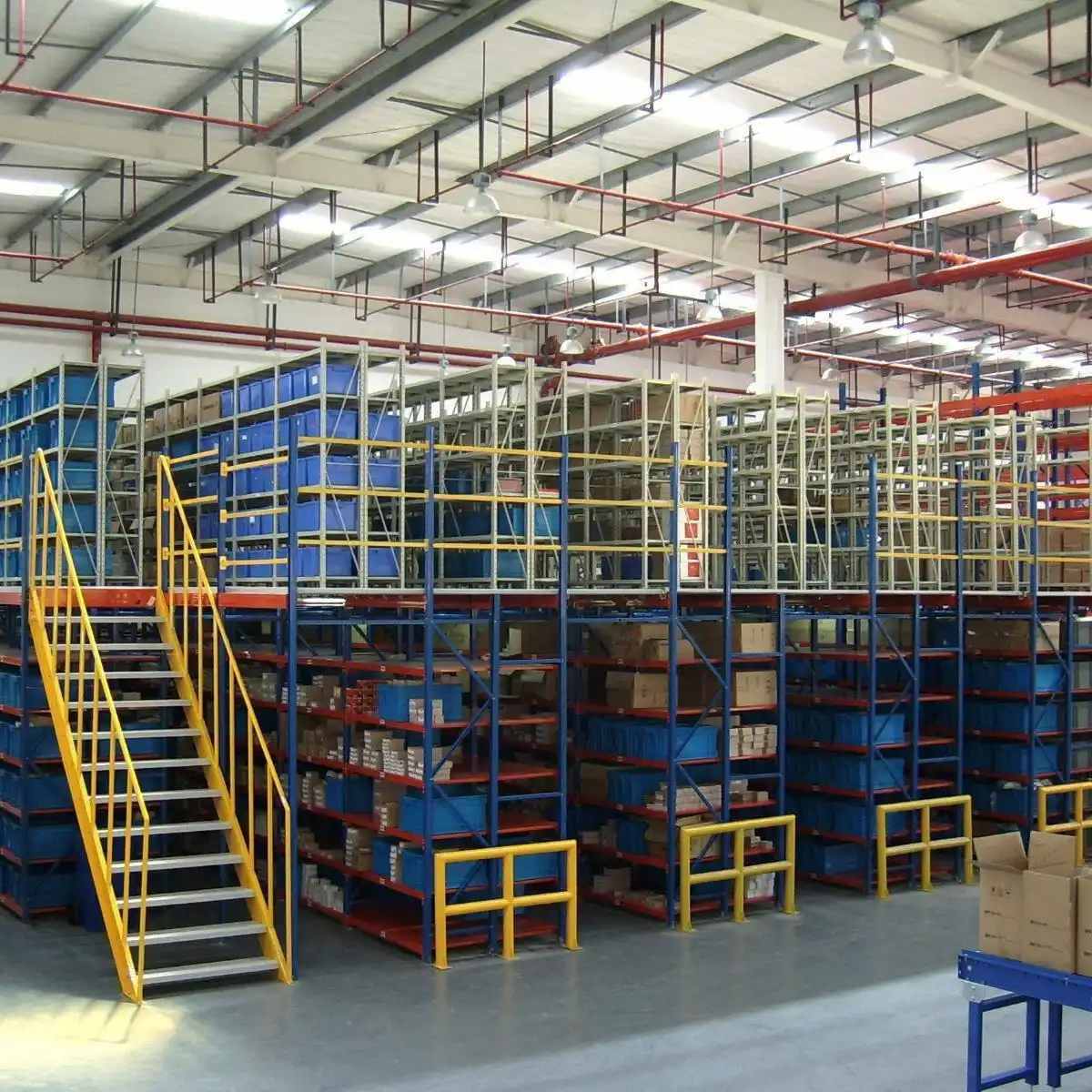
Mezzanine floor racking is a highly cost-effective warehouse space optimization solution specially designed to make full use of high vertical warehouse space. This customized steel structure platform builds an additional storage floor above the original working area, effectively doubling or even tripling the warehouse storage capacity without expanding the factory building area. It is widely adopted in factories, logistics warehouses, stockrooms and industrial workshops with high ceiling height and limited floor space.
- ✔ Maximizes vertical warehouse space
- ✔ Assembled steel structure — no on-site welding
- ✔ Customizable load capacity, height and size
- ✔ Optional stairs, handrails and cargo lifts
Mezzanine floor racking system- Features
- ✔ Maximize vertical warehouse space and greatly increase storage capacity.
- ✔ Assembled steel structure, no on-site welding, easy installation and relocation.
- ✔ Customizable floor load capacity, layer height and size to fit different warehouses.
- ✔ Can be equipped with stairs, handrails and cargo lifts for safe operation.
- ✔ Separate storage and picking areas to improve warehouse management efficiency.
- ✔ Durable powder coated surface, anti-rust and long service life.
Mezzanine floor racking system- Common Standards
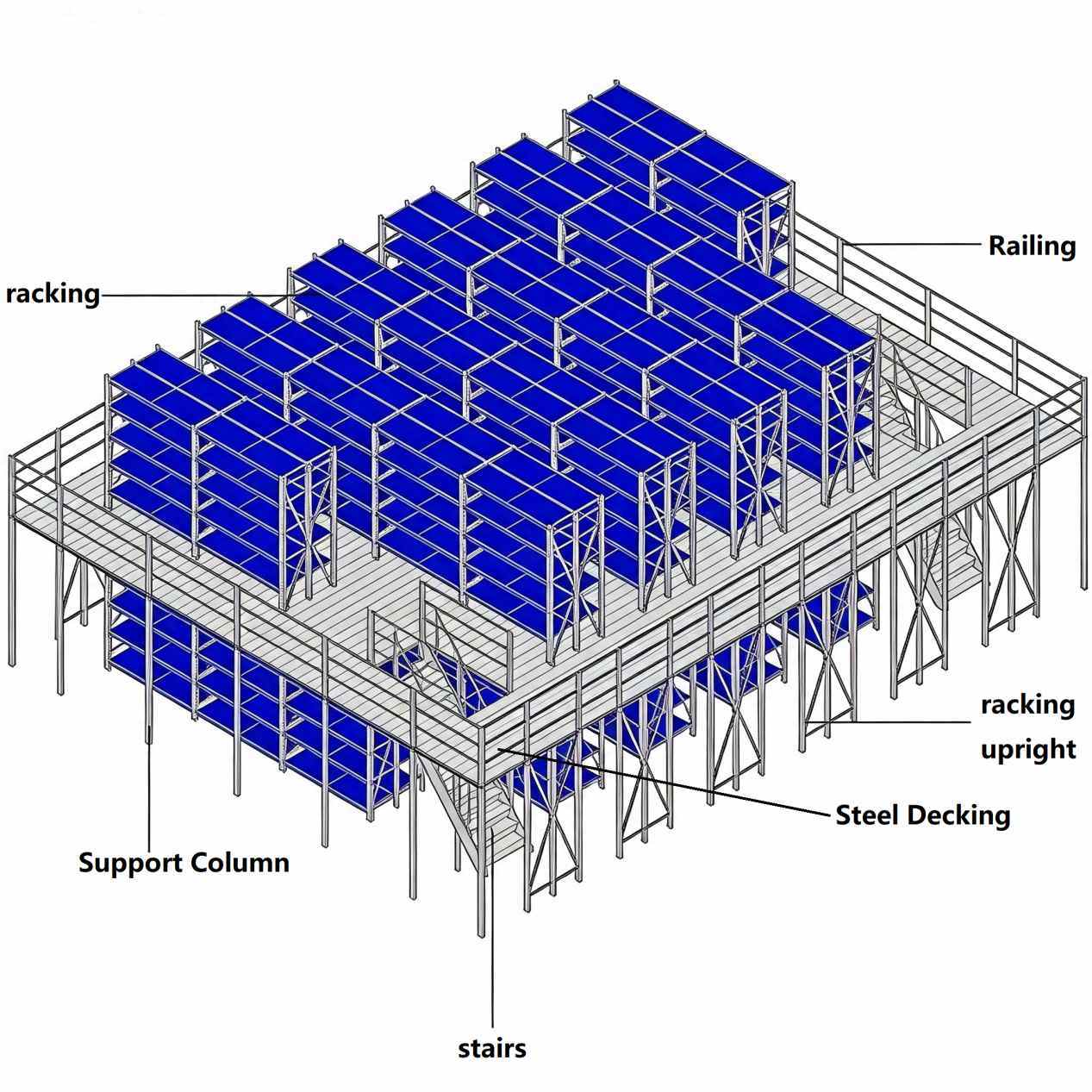
- ✔ Steel Decking: Normal load: 300–500 kg/㎡; Heavy duty: up to 800–1000 kg/㎡
- ✔ Height: Clear height per floor: 2200–2700 mm, 2500mm recommended for manual operation
- ✔ Support Column: Common size 90×70×2.0mm; heavy duty option 120×95×2.5mm
- ✔ Stairs: Standard stair width 900mm; 1200mm for two-way access
- ✔ Railing: Railing height 1100mm with toe board at bottom
- ✔ Floors: Commonly 2 floors; 3 floors available if warehouse height ≥6m
Mezzanine floor racking system-Applications
- ✔ E-commerce warehouse: store medium & small finished goods and support order picking.
- ✔ Hardware factory warehouse: store tools, fittings and metal spare parts.
- ✔ Electronics workshop: keep electronic components and semi-finished products.
- ✔ Textile warehouse: store fabric rolls and textile accessories.
- ✔ Auto parts warehouse: store light and medium auto spare parts.
- ✔ Light industry factory: store packaging materials and finished products.
Mezzanine floor racking system- Component